
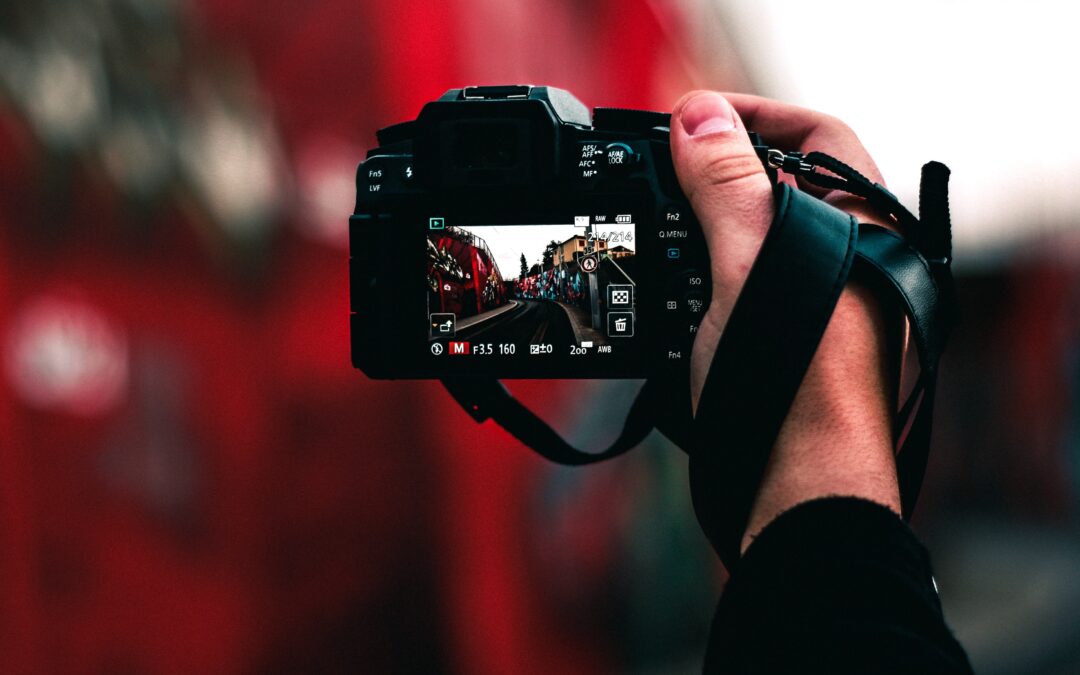
People are always surprised when they learn I don’t edit my photographs. In a world where Photoshop and AI seem to be the default, I know my approach sounds a bit old-fashioned. But for me, staying true to the craft is non-negotiable. It goes all the way back to being eight years old, holding a camera and feeling genuinely amazed that this little box could capture something exactly as I saw it. That feeling never left me.
Where It All Started
At school, the camera club had a darkroom, and that’s where everything changed for me. Watching an image come to life in a tray of chemicals was magic — real magic. It felt honest and pure, and I fell completely in love with the process. Later, when I worked in a fine art studio as a commercial photographer, that love only grew. Eventually I built my own darkroom at home and printed everything myself. I miss that part of my life deeply.
I don’t have the space for a darkroom anymore, but that hasn’t changed the way I think about photography. I’ll use digital cameras because I have to — but that’s where my compromise ends. No Photoshop. No manipulation. No AI. I want my work to reflect my eye, my ideas, my instincts — not someone else’s software.
The Value of Authenticity
People sometimes ask, “Why make it harder on yourself?”
My answer is simple: because the challenge is the point.
Creativity isn’t something I want a computer doing for me. I want the mistakes. I want the imperfections. I want the satisfaction of knowing the image is mine — captured as it truly existed in the world.
For my reflections, the only thing I ever touch is the contrast. And that’s not to “fix” anything — it’s just so viewers can see all the details I saw while taking the shot. Reflections can be so intricate that cameras sometimes flatten the layers. A tiny contrast boost helps separate them. But everything else? Straight from the camera.
People Are Always Shocked
My favourite moment is when someone asks, “Was this done in Photoshop?” and I get to say, “No — just sunlight.” The look on their face tells me everything. People are so used to digitally manipulated images that the idea of pure photography feels almost unbelievable now.
I want to bring that wonder back. I want people to remember what photography can do on its own — how powerful natural light is, how much emotion can come from the simplest detail, and how much beauty still exists without digital intervention.
Preserving a Dying Craft
I worry that traditional skills are disappearing. The darkroom, hand printing, analogue techniques, even the mindset behind them — they’re all becoming rare. That’s why it matters so much to me to keep photography as hands-on as possible.
When I create an image, I want it to be something I shaped myself, from the idea to the execution. I want to feel proud of the process, not just the result. And I want people to see that creativity doesn’t need shortcuts.
Photography has always been about capturing truth — even in abstract work. And the truth is far more interesting than anything I could fabricate on a screen.